
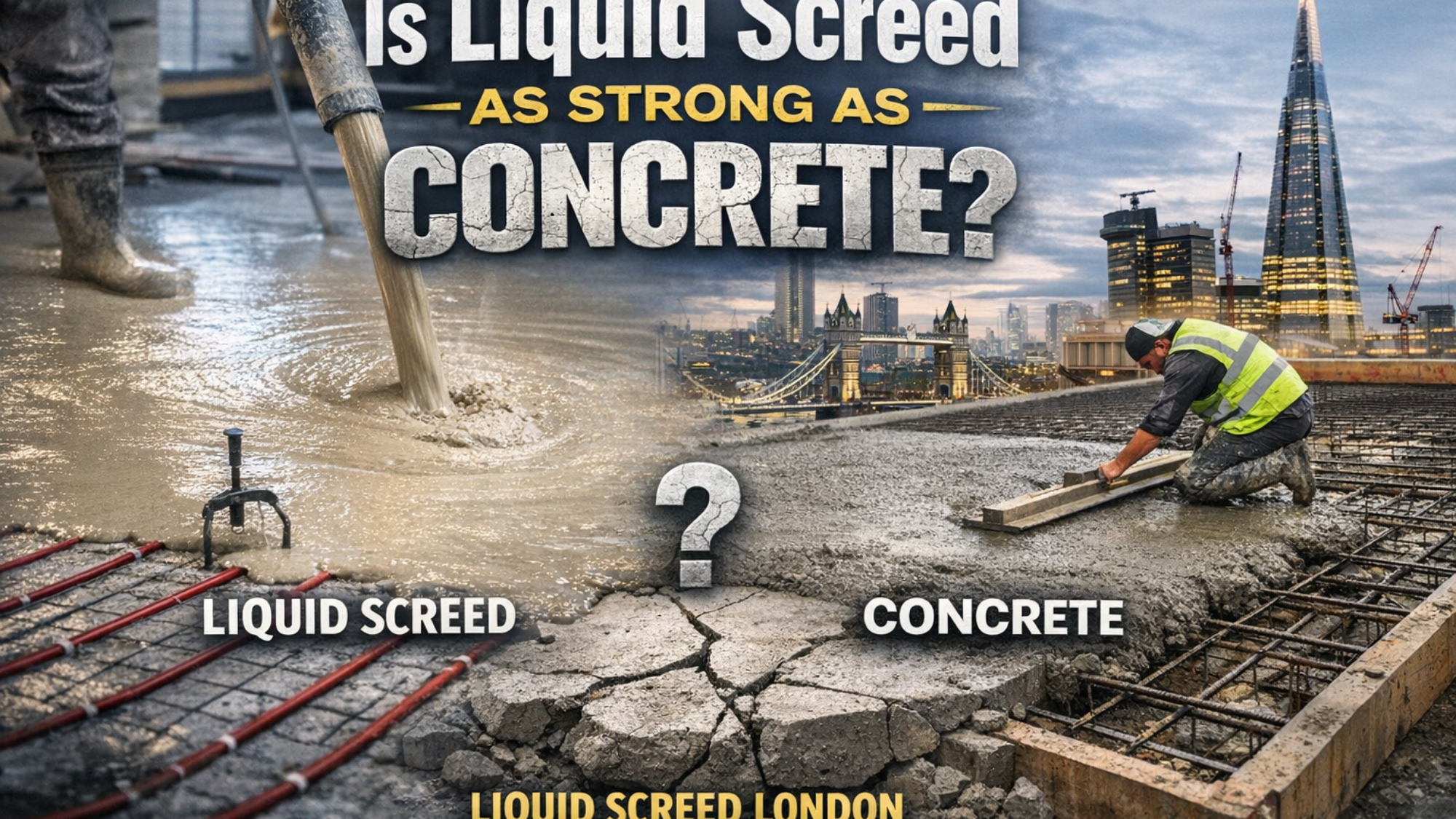
Is Liquid Screed as Strong as Concrete?
When planning a building project, one question often comes up: is liquid screed as strong as traditional concrete? For many homeowners, developers, and contractors in London and beyond, the appeal of liquid screed lies in its ease of installation, smooth finish, and faster drying times. Yet understanding how its strength compares to conventional concrete requires a closer look at materials, methods, and application contexts. This blog post explores the strengths and limitations of liquid screed, with a particular focus on the London construction scene and the keyword liquid screed london.
What is liquid screed?
Liquid screed is a flowing, pumpable cementitious material used to create a flat, smooth substrate for flooring systems. It typically consists of a cement-based binder, sharp sand, and modifiers that give it a highly workable consistency. Unlike traditional traditional floor screeds, which are laid as a thick, hand-trowelled layer, liquid screed can be poured to a precise depth and level in a single process. This makes it a popular choice for modern builds where time, accuracy, and underfloor heating compatibility are important.
Strength basics: liquid screed vs concrete
- Concrete is a robust, compressive material with a long history of use in structural elements such as slabs, foundations, and load-bearing floors. Its strength depends on mix design, curing, and reinforcement.
- Liquid screed, while strong enough for many floor applications, is primarily a decorative or non-structural layer in most settings. In many cases, it serves as a wear layer or base for floor coverings and underfloor heating systems. Its compressive strength is generally lower than that of structural concrete, but it can be formulated to achieve substantial strength suitable for domestic and light commercial floors.
Important distinction: liquid screed is usually designed as a floor screed layer, not a primary structural element. If your project requires high structural loads, the concrete slab beneath or over which the screed sits will bear the main loads. The screed provides a flat, level finish and a durable surface for final flooring.
Strength ranges and performance factors
- Compressive strength: Structural concrete often targets high compressive strengths (for example, 25 MPa to 40 MPa or more, depending on design). Liquid screed typically achieves lower compressive strengths, commonly in the range of 20 MPa or less for standard mixes, though design variants exist with higher values.
- Thickness and curing: Liquid screed is usually laid thinner than concrete slabs and cures rapidly due to its composition and the presence of aggregates and admixtures. Correct curing is essential to gain the intended strength and prevent cracking.
- Bonding and substrate: The performance of liquid screed depends on the substrate and any underfloor heating or insulation layers. Proper bonding to the subfloor and the ability to transfer loads through the finish floor coverings are critical considerations.
When liquid screed makes sense in a London context
- Time efficiency: In London build programs, speed of installation is often a priority. Liquid screed can be pumped into place quickly and levelled with minimal现场 finishing, reducing labour time and site disruption.
- Underfloor heating: Liquid screed is highly compatible with modern underfloor heating systems, providing efficient heat transfer and a comfortable living environment. This is particularly relevant toLondon homeowners who are upgrading floors.
- Flat, even finish: The self-levelling nature of liquid screed results in a smooth, even surface that’s ideal for quick installation of final floor coverings such as tiles, wood, or luxury vinyl.
- Noise and comfort: Screed layers contribute to the overall sound insulation and thermal mass of a building, improving comfort in multi-storey London homes and apartment blocks.
Considerations and potential drawbacks
- Not a structural element: Relying on a liquid screed for structural support is not appropriate. The structural slab or beams must be designed to bear loads, with the screed acting as a finish layer.
- Cracking and movement: Like all screeds, liquid screed can crack if not correctly designed or cured. Controlling shrinkage, proper expansion joints, and accommodating movement are essential.
- Surface preparation: Surfaces must be well-prepared for bonding, with minimal moisture transmission. If moisture is trapped, it can affect finishes and adhesives for floor coverings.
- Access to skilled installers: Liquid screed requires precise mixing, pumping, and finishing techniques. In London, the availability of experienced screed specialists can influence project timeline and quality.
How to decide between liquid screed and traditional solid concrete
- Structural requirements: If your project relies on a strong, load-bearing slab, consult a structural engineer. The concrete design will determine whether a traditional concrete slab is needed.
- Floor finishing and underfloor heating: If you plan underfloor heating or fast-track installation, liquid screed offers clear advantages. Ensure compatibility with your chosen floor coverings.
- Timing and budget: Liquid screed can reduce on-site time but may have different material costs or subcontractor requirements. Assess the total project timeline and budget to decide.
Maintenance and long-term performance
With proper installation and curing, liquid screed delivers a durable surface compatible with most domestic and light commercial floor coverings. Regular maintenance of the final floor finish (e.g., ceramic tiles, engineered wood, or laminate) will determine longevity, while the screed itself typically requires little ongoing maintenance beyond routine cleaning and minor repairs where cracks occur.
Final thoughts
Liquid screed london is a modern solution that brings speed, flatness, and underfloor heating compatibility to many projects in the capital. However, it is important to separate the roles of the screed from the structural concrete elements. While liquid screed can offer impressive strength for the finish layer, it is not a substitute for traditional concrete when it comes to bearing primary loads. For most London builds, the best approach is to engineer the structural slab to meet load requirements and use liquid screed as a high-performance, level, and well-thermally integrated finish. When selecting products and installers, prioritise proven mix designs, proper curing, and skilled application to ensure the strongest possible outcome for your floors.
Add a Comment