
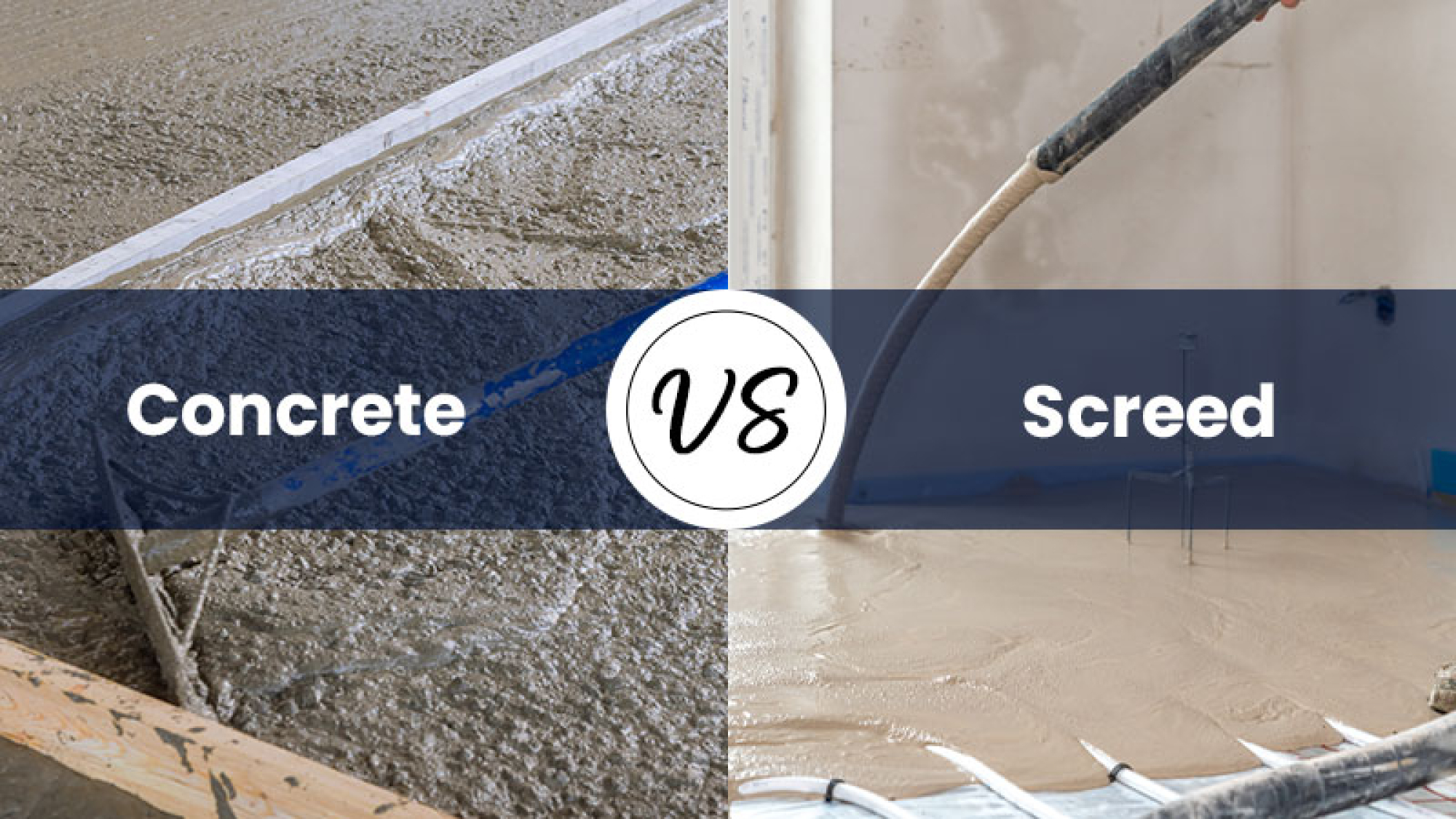
Here at PCS City Group we’re a friendly bunch who just happen to know a thing or two about screeding, serving Essex, London & Kent. We’re passionate about floor prep – it’s what drives us as a team – even though we know not everyone shares our enthusiasm for subfloors. For many people, the world of construction materials can be a bit of a minefield – a confusing mess of mortar, mesh and more. Let’s talk about two materials that often get lumped in together: screed and concrete.
You might be wondering, do they serve the same purpose? It’s a question we get asked a lot, and while they do share a few similarities at first glance, they actually do totally different jobs. Think of concrete as the big, loud frontman of a rock band – it provides the foundation and the backbone of the build.
Screed, on the other hand, is the guy who adds the finishing touches, laying down a smooth finish that makes the whole thing look perfect. Getting to grips with the difference between screed and concrete is key to getting a project that not only stands the test of time but also looks the part.
This guide is here to help you out, breaking down the whats, the whys and the hows of screed vs concrete so that you can make an informed decision for your next build.
What is screeding?
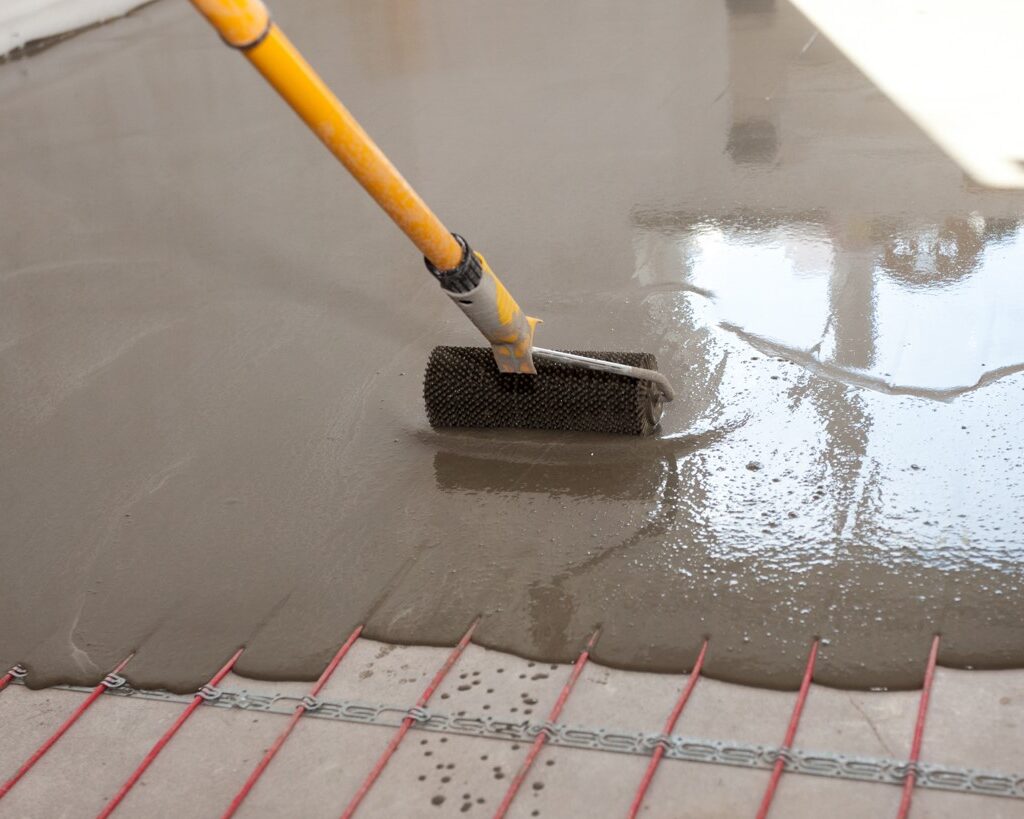
So, screeding – what does it even mean? To put it simply, screeding involves slapping a thin layer of material down over a subfloor or concrete base. The goal is to create a smooth, level surface that’s good to go for the final floor covering – whether that’s tiles, carpet, or wood.
Typically, screed is made up of a mix of cement and sharp sand. This combination gives it a much finer, smoother finish than concrete. And it’s not just about creating a level surface – screed can also be used to house underfloor heating pipes and provide some decent thermal or acoustic insulation. It’s the sort of unsung hero that ensures your finished floor ends up looking beautiful and working properly.
Different types of screed
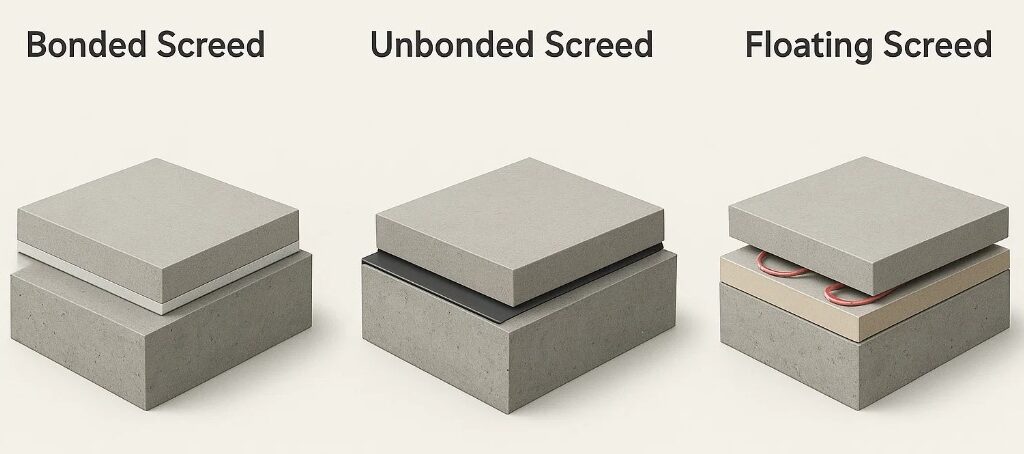
Not every screed is created equal. The type you go for depends on the project’s specific needs. Here are the main three:
Bonded screed
This type is applied directly onto the concrete subfloor with a special bonding agent. It’s a good choice for areas that are going to get a lot of foot traffic or heavy loads, as the bond creates a strong, integrated surface that’s going to stand up to it.
Unbonded screed
With this type, a damp-proof membrane is laid down first, then the screed goes on top of it. Because it isn’t directly bonded to the concrete base, it’s less prone to all sorts of issues like shrinkage and settlement. It’s a pretty reliable option for a lot of projects.
Floating screed
If you’re putting in underfloor heating or need extra insulation, floating screed is the way to go. It gets laid over a layer of insulation material, sitting on top of the subfloor rather than being firmly fixed to it. This method is pretty great for improving energy efficiency and soundproofing.
What is concrete?
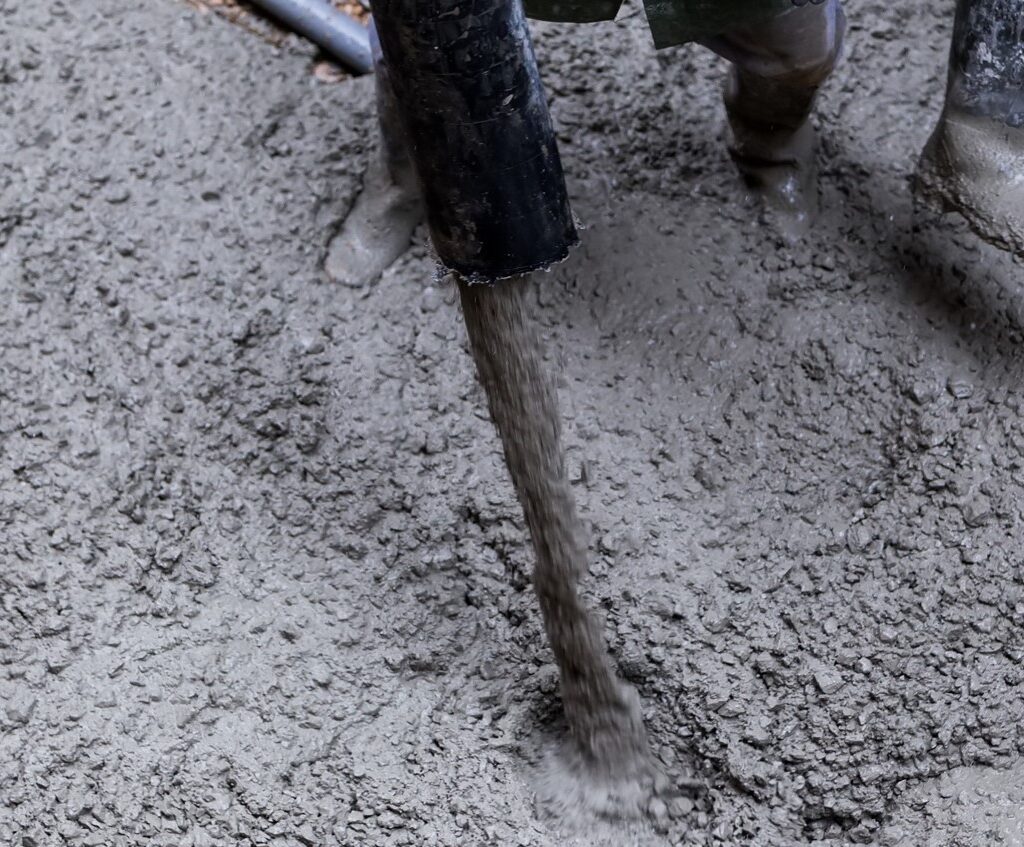
Concrete is a real heavy hitter in the construction world. It’s a super strong, composite material that’s built to last. You’ll find it forming the foundations of buildings, the structures of bridges, and the skeleton of skyscrapers.
Its strength comes from its composition: a mix of cement, water and aggregates. The key difference is the size of the aggregates. Concrete uses coarse ones like gravel and crushed stone, giving it an immense load-bearing capacity and a typically rough, rugged appearance. It’s the go to material when you need some uncompromising structural integrity.
Screed and concrete: key differences
Screed and concrete are pretty different, even though they might look like they’re related. Let’s go over the main differences to help you tell them apart.
- Material composition: The biggest difference is in the aggregates. Concrete uses big, coarse aggregates for strength, while screed uses finer, sharp sand to give it a smooth finish.
- Application: Concrete is all about building the structure, so it gets used for the foundations, walls and beams of a building. Screed, on the other hand, is a finishing product, applied on top of concrete to create a level surface for the final flooring.
- Appearance: Run your hand over both and you’ll feel the difference. Concrete is all rough and rugged, whereas screed is smooth and fine.
- Strength and durability: Concrete is designed to take an absolute pounding and withstand the elements, whereas screed isn’t designed for structural work – its purpose is to provide a durable, level surface that can handle foot traffic before the final floor is laid.
- Drying time: Drying times can be a real pain. Traditional screed can take a long time to dry fully, but we’ve got some modern solutions that have made a big difference. At PCS City Group, we offer some really fast-drying screeds that can have foot traffic on them in no time, keeping your project on track.
When to use screed
Screed is the solution when your focus is on the finish. Here are a few common scenarios where screeding is essential:
- Underfloor heating systems: Screed is perfect for embedding underfloor heating pipes. It encases the system, allowing for excellent heat transfer and creating a warm, comfortable environment. PCS City Group provides specialised screeds designed specifically for this purpose.
- Achieving smooth, level surfaces: If you need a perfectly flat surface quickly, our self-levelling screeds are an ideal choice. They flow easily to fill in imperfections, creating a flawless base for any floor covering.
- Fixing uneven floors: Got a lumpy, uneven floor? Latex floor screeding is a flexible and effective solution that can smooth out problematic surfaces, providing a stable and durable foundation.
When to use concrete
The main construction material uses concrete because it delivers the highest strength and structural support.
Reserve it for projects such as:
- Laying foundations for new buildings or extensions.
- The process of building structural components which include walls and columns and beams.
- Any project that requires a high load-bearing capability, such as driveways or industrial floors.
Frequently asked questions
What is the ideal thickness for screed?
The ideal thickness depends on the type of screed. Bonded screed can be as thin as 25mm, while unbonded screed is typically at least 50mm. Floating screed for domestic use is usually around 65mm, but this can vary.
Can screed be used outdoors?
Generally, standard screed is not recommended for outdoor use as it’s not designed to withstand the elements. However, there are specialised products available that are suitable for external applications. It’s always best to consult with a professional.
How long does screed take to dry?
Traditional screed dries at a rate of about 1mm per day up to 40mm thickness. The process requires an extended period of time. However, at PCS City Group, we offer fast-drying screed options that significantly reduce this time, allowing you to proceed with your project much sooner.
Do you need to screed before tiling?
Yes, it is highly recommended. Tiling requires a perfectly flat and level surface to avoid cracks and ensure a professional finish. Screeding creates the perfect surface for tile installation because it enables proper tile placement and extends their lifespan for multiple years.
Can screed be laid on top of a concrete floor?
Yes, screed can be laid on top of a concrete floor. This is a common practice to achieve a smooth and level surface for the final floor finish. The concrete subfloor provides structural stability, while the screed acts as a preparatory layer that ensures the final flooring material, such as tiles, wood, or carpet, adheres properly and performs well over time.
Acoustic or thermal insulation – what’s the difference?
Acoustic and thermal insulation serve different purposes but can both be incorporated into a screed floor system.
Acoustic insulation is used with screed to reduce sound transmission between floors. This creates a quieter environment and is particularly useful in apartments or multi-story buildings.
Thermal insulation, on the other hand, is laid beneath the screed to minimise heat transfer. This is essential for improving energy efficiency, especially when underfloor heating is installed, as it directs heat upwards into the room.
While both enhance comfort, the choice depends on whether your priority is noise reduction or temperature control.
Let’s get your floor sorted.
So there you have it. The strength of concrete comes from its structure but screed creates the perfect surface finish which makes every excellent floor stand out. From residential homes to commercial spaces, getting the base right is the key to a long-lasting, high-quality floor.
At PCS City Group, floor screeding is our passion. Our team has all the required skills and premium resources to execute your project at peak levels while keeping to your timeline and minimising project intricacies.
You are ready to start your project work by completing its first essential task. The team provides customers with free no-obligation quotes for establishing contact.
Add a Comment